

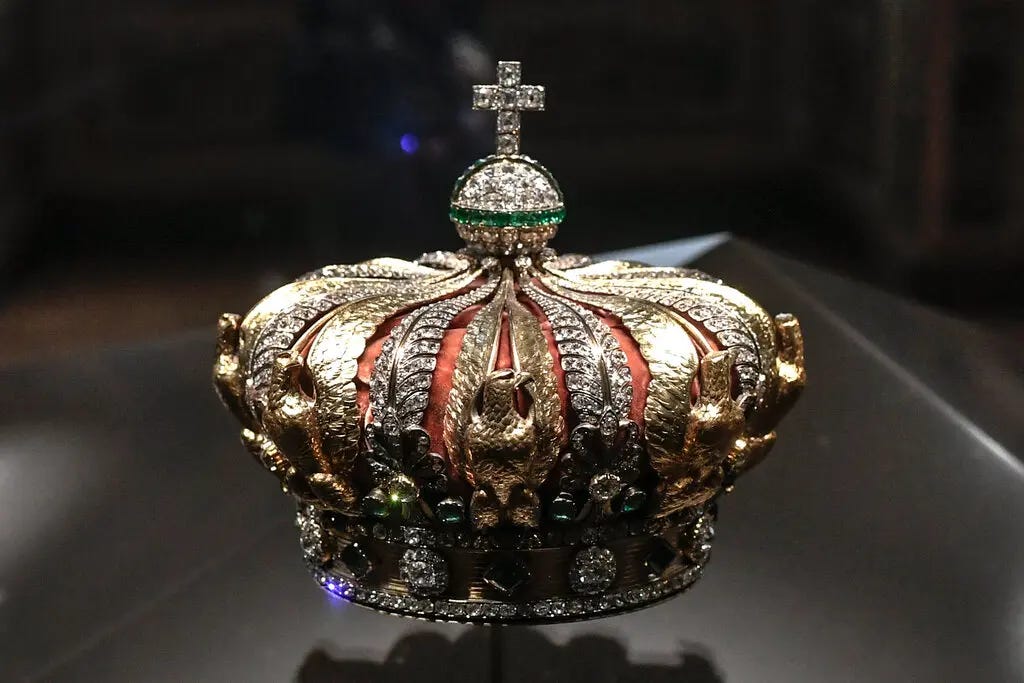
Photo: Stephane De Sakutin/Agence France-Presse
Overview
Date: October 20-21, 2025
Summary: A brazen daytime robbery occurred at the Louvre museum on Sunday, October 19, 2025, where a gang of four thieves used a mechanical ladder and power tools to break into the Apollo Gallery. They stole eight to nine pieces of royal jewelry, including necklaces and a diadem, valued by the Paris prosecutor at approximately 88 million euros (over $100 million). Authorities are intensifying their hunt for the culprits, who are believed to be part of an organized crime group focused on dismantling the jewels for their raw materials rather than their artistic value. The incident has sparked a national debate over museum security and France’s cultural heritage, with officials acknowledging long-standing security concerns despite claims that the museum’s systems functioned during the heist.
Sources
The New York Times - Stolen Louvre Jewelry Worth Over $100 Million, Paris Prosecutor Says
The New York Times - Why Steal From the Louvre? It May Have More to Do With Stones Than Art.
NBC News - Police intensify hunt for Louvre thieves as France reels from jewel heist
The Washington Post - Here’s what could happen to the Louvre’s stolen jewelry
The Washington Post - The last time the Louvre was robbed was in 1998. It happened twice.
See also: Timeline: How thieves robbed the Louvre of ‘priceless’ jewels (CNN)
Key Points
A brazen daytime robbery occurred at the Louvre museum on Sunday, October 19, 2025, involving a gang of four thieves who used a mechanical ladder to access a second-floor window and power tools to break into display cases in the Apollo Gallery.
The thieves stole eight to nine pieces of royal jewelry, including necklaces, earrings, and a diadem. One piece (a crown) was recovered damaged near the escape route.
The estimated value of the stolen jewels is 88 million euros (over $100 million), as stated by the Paris prosecutor and Louvre curators.
Experts widely believe the primary motive for the theft was “commodity theft” – to dismantle the jewels for their precious stones and metals to be sold on the black market, rather than for their artistic or historical value.
The stolen items are not insured by a private entity, as the French state acts as its own insurer for national collections due to prohibitive costs and a low accident rate.
The heist was quick, lasting between four and seven minutes inside the museum, and the thieves escaped on scooters or motorbikes.
The incident has sparked a national outcry in France, with government officials acknowledging the “negative” image it portrays and the feeling that “the French people all feel like they’ve been robbed.”
The investigation is a high priority, involving a significant number of police and specialized units, with security camera footage and physical evidence being analyzed.
The theft highlights broader vulnerabilities in museum security across Europe, which has seen a recent wave of similar commodity-focused robberies.
Unique Highlights
The New York Times - Stolen Louvre Jewelry Worth Over $100 Million, Paris Prosecutor Says details how the mechanical ladder was obtained by pretending it would be used for a move, and that the complaint was filed in a town coincidentally named Louvres, 22 miles north of Paris. It also specifies the increase in the investigation team from 60 to 100 people.
The New York Times - Why Steal From the Louvre? It May Have More to Do With Stones Than Art provides specific examples of other commodity-focused museum thefts across Europe, such as the giant gold coin from Berlin’s Bode Museum (2017), jewels from Dresden’s Green Vault (2019), and the gold toilet from Blenheim Palace (2019), to illustrate the growing trend. It also introduces Joanna Hardy’s skepticism about the logic of stealing small diamonds for recutting due to market availability.
NBC News includes an eyewitness account from American Jacob Barker, who was in the Galerie D’Apollon during the break-in and heard banging and the sound of a saw, fearing a “chainsaw-wielding robber” or “mass terrorists.” It also provides the specific number of diamonds (over 1,300) on the recovered crown.
The Washington Post - Here’s what could happen to the Louvre’s stolen jewelry includes Robert Wittman’s (former FBI Art Crime Team founder) perspective that “the real art in an art heist isn’t the stealing, it’s the selling” and his unusual hope that the thieves might preserve the trove for a reward from the French government, believing criminals recognize historical value. It also mentions the example of Yogi Berra’s World Series rings being melted in a garage.
The Washington Post - The last time the Louvre was robbed was in 1998. It happened twice provides a historical overview of past Louvre thefts, including two incidents in 1998 (a Greek votive stela and a Corot painting), the famous 1911 Mona Lisa theft, and the 1976 theft of King Charles X’s diamond-studded ceremonial sword. It also suggests security measures like photo ID checks for museum visitors.
EL PAÍS mentions that French Culture Minister Rachida Dati acknowledged that warnings about potential security problems at the museum “had been received ‘for a long time, I would say too long’,” and details the ongoing implementation of security audit recommendations, including restructuring control centers and installing “kilometers of cable.”
Contrasting Details
Number of Stolen Items: While The New York Times states that eight pieces were snatched, NBC News and The Washington Post initially refer to nine items stolen but clarify that one (a crown) was found damaged on the escape route, leaving eight missing. EL PAÍS also refers to nine stolen pieces but does not explicitly mention one being recovered damaged.
Security System Effectiveness: French Culture Minister Rachida Dati, as reported by The Guardian and EL PAÍS, stated that “The Louvre museum’s security apparatus did not fail, that is a fact,” and “The reality is that they worked.” However, The New York Times mentions that “French lawmakers and newspapers discussed potential security lapses at the Louvre that may have aided the robbery.” Furthermore, EL PAÍS notes that Dati acknowledged “warnings had been received ‘for a long time, I would say too long’” regarding potential security problems, and that the museum director had commissioned audits leading to ongoing implementations of recommendations, implying recognized deficiencies despite Dati’s immediate defense.
Motive for Thieves / Fate of Jewels: While most articles agree the thieves likely intend to dismantle the jewels for their raw materials, there are differing interpretations regarding the likelihood of this happening immediately or if the jewels might be preserved. Robert Wittman (former FBI Art Crime Team founder), quoted in The Washington Post, expresses hope that thieves might preserve the trove for a reward, believing they know the historical value. In contrast, Leila Amineddoleh (Fordham University law professor) in the same article, and Erin Thompson (art crime professor) in NBC News, are less optimistic, stating the jewels are “absolutely” not cared for and are likely being dismantled quickly to reduce detection risk. The Paris prosecutor, Laure Beccuau, as reported by The New York Times and EL PAÍS, expressed a hope that thieves would “think about it and not destroy the jewelry” if they realized they wouldn’t earn the full value by disassembling them, suggesting the possibility of preservation.
The Newsie Project uses AI to summarize, compare, and contrast the reporting of the major US and world online news sources.
This is an evolving project. Tools, approaches, and output formats will change over time. The Newsie Project does not attempt to provide a definitive capsule of any news story. While the incidence of errors in these summaries is low, and I attempt to spot-check details, AI tools can hallucinate. Please click through and read the articles for details (some may be paywalled).