

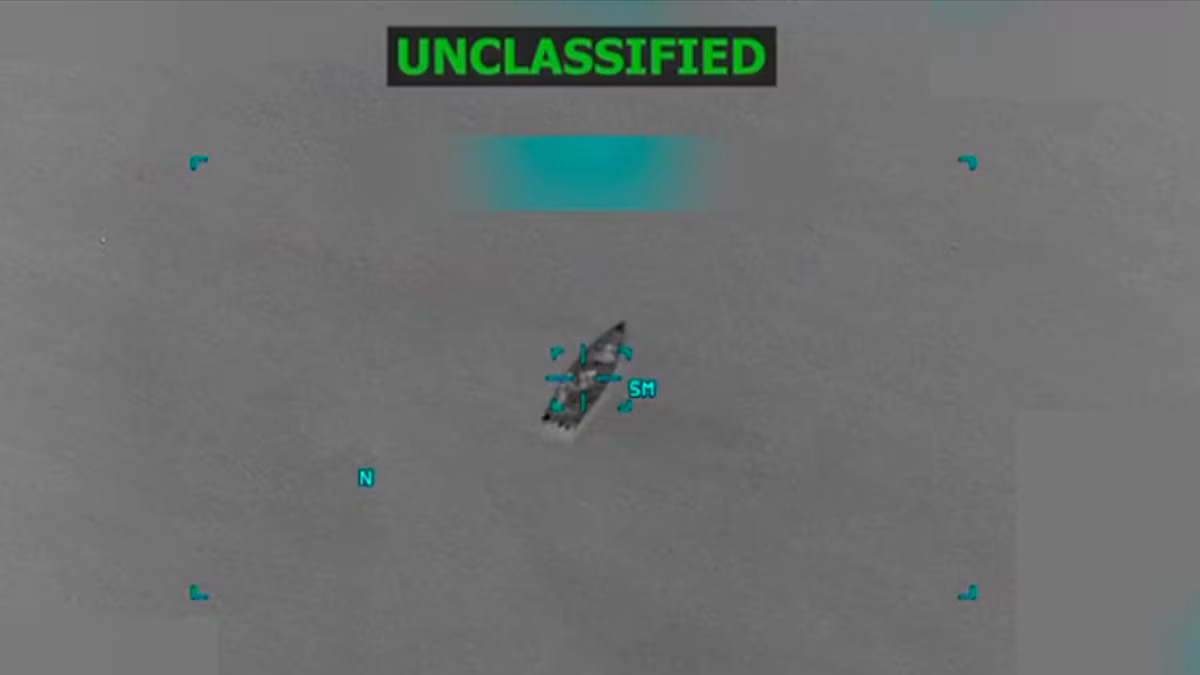
Photo: United States Government
Overview
Date: October 14, 2025
Summary: The U.S. military conducted its fifth strike on a suspected drug-trafficking boat off the coast of Venezuela, killing six people and bringing the total fatalities from such operations since September to 27. The administration justifies these actions by claiming the U.S. is in a “non-international armed conflict” with designated drug cartels and acting in self-defense. However, these strikes have ignited significant legal and ethical debate, with critics, including international bodies and some U.S. lawmakers, questioning their legality as extrajudicial killings.
Sources
The New York Times - U.S. Military Kills Another 6 People in 5th Caribbean Strike, Trump Says
CNN - Six killed after US strikes another boat off coast of Venezuela
The Washington Post - U.S. kills 6 alleged drug smugglers in new strike off Venezuela, Trump says
The Wall Street Journal - U.S. Strikes Another Boat It Says Was Trafficking Drugs
Fox News - Trump touts another US strike near Venezuela that killed six alleged drug smugglers
BBC - US strikes another vessel off Venezuela coast, killing six
Key Points
The U.S. military conducted its fifth strike on a vessel suspected of drug trafficking off the coast of Venezuela since September.
The latest strike killed six people, bringing the total number of fatalities from these operations to 27.
President Trump announced the strike on his Truth Social platform, claiming the vessel was trafficking narcotics and was affiliated with “Designated Terrorist Organizations” or “illicit narcoterrorist networks.”
The strikes occurred in international waters, and Trump stated that no U.S. forces were harmed.
The Trump administration defends the strikes by asserting that the U.S. is in a “non-international armed conflict” with drug cartels, which have been designated as terrorist organizations, justifying the use of lethal force under the laws of war and as self-defense.
These operations have raised significant legal questions and bipartisan scrutiny regarding the president’s authority to use lethal force against suspected criminals without due process.
Congress has not authorized armed force against drug cartels, and attempts to pass resolutions to block these strikes have failed.
Venezuela has condemned the strikes, viewing them as extrajudicial killings and part of a broader U.S. effort to intimidate and seek regime change.
Unique Highlights
The New York Times reported that legal specialists have called the premeditated and summary extrajudicial killings illegal, noting that the military cannot lawfully target civilians, even criminal suspects, who do not pose an imminent threat. It also highlighted Trump’s varying legal justifications for previous strikes, such as “self-defense” for the September 2 strike and “unlawful combatants” for the September 15 strike.
CNN specifically mentioned that “even among some conservatives, there has been unease” regarding the strikes, and reported that at least one boat struck by the U.S. military had turned around before it was hit, indicating it did not pose an imminent threat. It also detailed Republican Sen. Rand Paul’s public criticism of Vice President JD Vance for celebrating one of the strikes, calling it a “despicable and thoughtless sentiment… to glorify killing someone without a trial.”
The Washington Post noted that Senate Republicans narrowly defeated an effort led by Democrats last week that would have blocked the U.S. military from continuing the strikes. It also specified that Trump issued an executive order in January designating a number of Latin American groups as foreign terrorist organizations.
The Wall Street Journal provided details on the extensive U.S. military buildup in the Caribbean, including guided-missile destroyers, F-35B jet fighters, MQ-9 Reaper drones, and a special operations ship, with some aircraft flying close to Venezuela. It also explained the “Cartel of the Suns” as allegedly made up of Venezuelan generals protecting Colombian cocaine shipments and detailed drug trafficking routes, noting that a “relatively small amount of U.S.-bound cocaine is shipped from Venezuela up through the Caribbean islands,” with 88% originating in Colombia.
Fox News specified that the White House sent lawmakers a memo on September 30 informing them of the “non-international armed conflict” with drug smugglers. It reported on the Department of War unveiling a new counter-narcotics Joint Task Force in the Southern Command area of responsibility, quoting Secretary of War Pete Hegseth’s objective to “crush the cartels, stop the poison, and keep America safe.” It also provided the specific vote count for the failed Senate resolution (51-48), noting that Republican Senators Rand Paul and Lisa Murkowski voted with Democrats.
El País mentioned that the Venezuelan criminal gang Tren de Aragua was added to the State Department’s list of foreign terrorist organizations last February. It also reported Trump hinting at a “second phase” of this fight that would involve actions on land, not just at sea.
The Guardian highlighted that experts at the United Nations have condemned the U.S. strikes as “extrajudicial executions,” stating that “International law does not allow governments to simply murder alleged drug traffickers.” It also reported Colombian President Gustavo Petro’s claim that one of the recently targeted boats was Colombian with Colombians onboard, and the White House’s demand for him to retract the “baseless and reprehensible” statement.
BBC suggested that framing the situation as an active armed conflict is likely a way for Trump to justify using “more extreme wartime powers,” such as killing “enemy fighters” or detaining people indefinitely. It also pointed out that Venezuela is “not considered a hotspot for drug trafficking compared to some other locations in the region,” implying the strikes might be part of a “wider political campaign to put military pressure on Venezuela’s President Nicolás Maduro.”
Contrasting Details
Trump’s Drug Overdose Statistics vs. CDC Data: The Washington Post contrasts President Trump’s claim that “more than 300,000 U.S. citizens die of drug overdoses annually” with the Centers for Disease Control and Prevention’s report of “87,000 overdose deaths for the year ending in September 2024, an almost 27 percent decline from the previous year.”
Legality of Strikes: While the Trump administration (cited across The New York Times, CNN, The Washington Post, Fox News, El País, and BBC) defends the strikes as lawful under the “laws of war” or “standing authorities as Commander-in-Chief” due to an “armed conflict” with designated terrorist organizations, The New York Times quotes legal specialists calling them “premeditated and summary extrajudicial killings illegal.” The Guardian further cites UN experts condemning the strikes as “extrajudicial executions,” stating that “International law does not allow governments to simply murder alleged drug traffickers.”
Imminent Threat Justification: The New York Times notes that the administration has not explained how a boat far from the U.S. coast posed an “imminent threat of armed attack” to justify self-defense. This is further challenged by CNN’s report that “at least one boat struck by the US military had turned around before it was hit, indicating it did not pose an imminent threat to the US or US forces.”
Primary Motivation for Strikes: While the administration consistently frames the strikes as combating drug trafficking and “narcoterrorism,” The Wall Street Journal, Fox News, El País, and BBC suggest an underlying political motive. The BBC explicitly states that Venezuela is “not considered a hotspot for drug trafficking compared to some other locations in the region,” implying that the strikes are part of a “wider political campaign to put military pressure on Venezuela’s President Nicolás Maduro” and advance “regime change” policies.
Nationality of Victims: The New York Times and BBC mention that Trump did not identify the nationality of those killed. In contrast, The Guardian reports Colombian President Gustavo Petro’s claim that there were “indications” one of the targeted boats was Colombian “and had Colombians onboard,” a claim the White House demanded he retract as “baseless and reprehensible.”
The Newsie Project uses AI to summarize, compare, and contrast the reporting of the major US and world online news sources.
This is an evolving project. Tools, approaches, and output formats will change over time. The Newsie Project does not attempt to provide a definitive capsule of any news story. While the incidence of errors in these summaries is low, and I attempt to spot-check details, AI tools can hallucinate. Please click through and read the articles for details (some may be paywalled).