

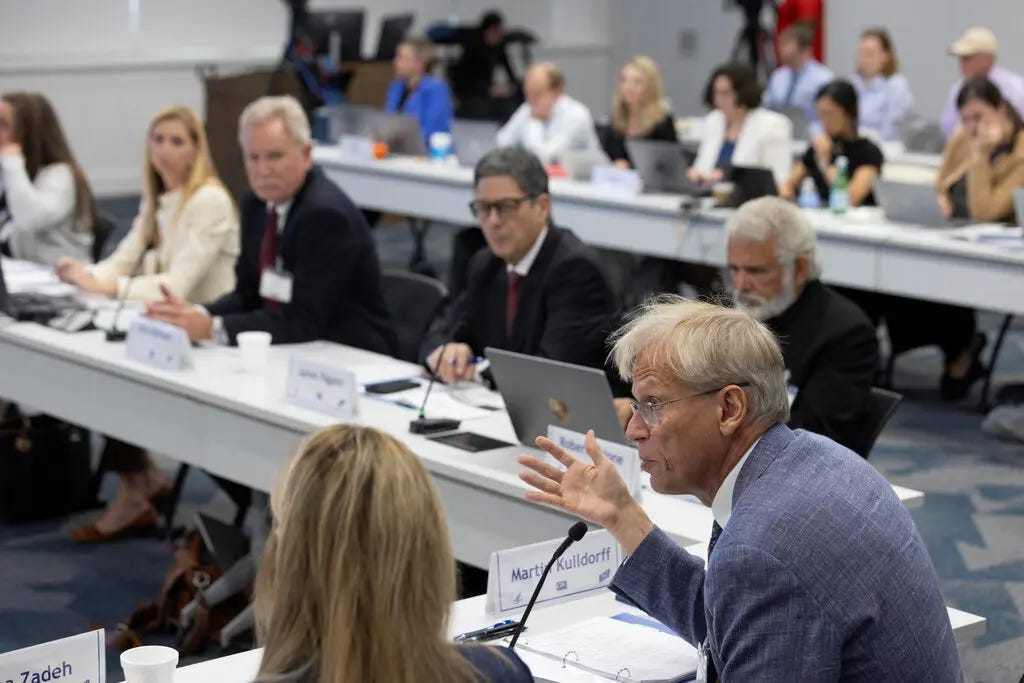
Photo: Alyssa Pointer/Reuters
Overview
Date: September 18, 2025
Summary: Recent decisions by the CDC’s Advisory Committee on Immunization Practices, led by new appointees from Health and Human Services Secretary Robert F. Kennedy Jr., have stirred considerable attention. The panel voted against recommending a combination vaccine for measles, mumps, rubella, and chickenpox (MMRV) for children under four, reverting to separate vaccines due to concerns over febrile seizure risks. The vote has prompted debates over its implications, with concerns voiced about the impact on vaccine compliance and public trust. The hepatitis B vaccine recommendation for newborns was also discussed, with a vote postponed. The panel’s changes have drawn heavy criticism from various health experts and organizations, emphasizing the potential risks to public health.
Sources
The New York Times - Kennedy’s Advisory Panel Votes to Limit M.M.R.V. Vaccine for Children Under 4
The Washington Post - CDC advisers make their first childhood vaccine edit
Key Points
The Advisory Committee on Immunization Practices voted to recommend separate vaccinations for measles, mumps, rubella, and chickenpox, instead of the combined MMRV shot for children under four.
Concerns were raised about the risk of febrile seizures with the MMRV vaccine, although these seizures are rare and generally not harmful.
The vote reflects broader changes within the CDC under Robert F. Kennedy Jr.’s leadership and new panel appointees, many of whom have controversial or critical views on vaccines.
A decision on whether to postpone the hepatitis B vaccine for newborns was delayed, expected to be re-examined alongside the discussion on COVID-19 vaccines.
Unique Highlights
The New York Times reported confusion within the committee regarding the votes, particularly about the Vaccines for Children program decisions.
CNN highlighted that former CDC directors and senior officials have criticized the leadership changes under Robert Kennedy Jr., expressing concerns about potential negative health impacts.
The Washington Post noted that the meeting saw a departure from previous norms, lacking comprehensive discussions on the public health impacts and that it includes individuals without noted vaccine expertise.
The Wall Street Journal focused on concerns about potential impacts on vaccine supply and insurance coverage due to the new recommendation.
The Guardian emphasized the potential decline in adherence to vaccination schedules due to increased appointments required with separate vaccines.
Contrasting Details
While The New York Times and CNN highlighted the confusion and potential policy impacts due to the new votes, The Wall Street Journal and The Washington Post focused more on the scientific discussions and risk assessments within the panel.
CNN and The Guardian stressed the criticism from health professionals against the new advisory panel’s recommendation process, reflecting varied interpretations of the scientific community’s responses.
The Guardian mentioned public opinion and survey results regarding vaccine mandates, which was not covered in the other articles.
The Newsie Project uses AI to summarize, compare, and contrast the reporting of the major US and world online news sources.
This is an evolving project. Tools, approaches, and output formats will change over time. The Newsie Project does not attempt to provide a definitive capsule of any news story. While the incidence of errors in these summaries is low, and I attempt to spot-check details, AI tools can hallucinate. Please click through and read the articles for details (some may be paywalled).