

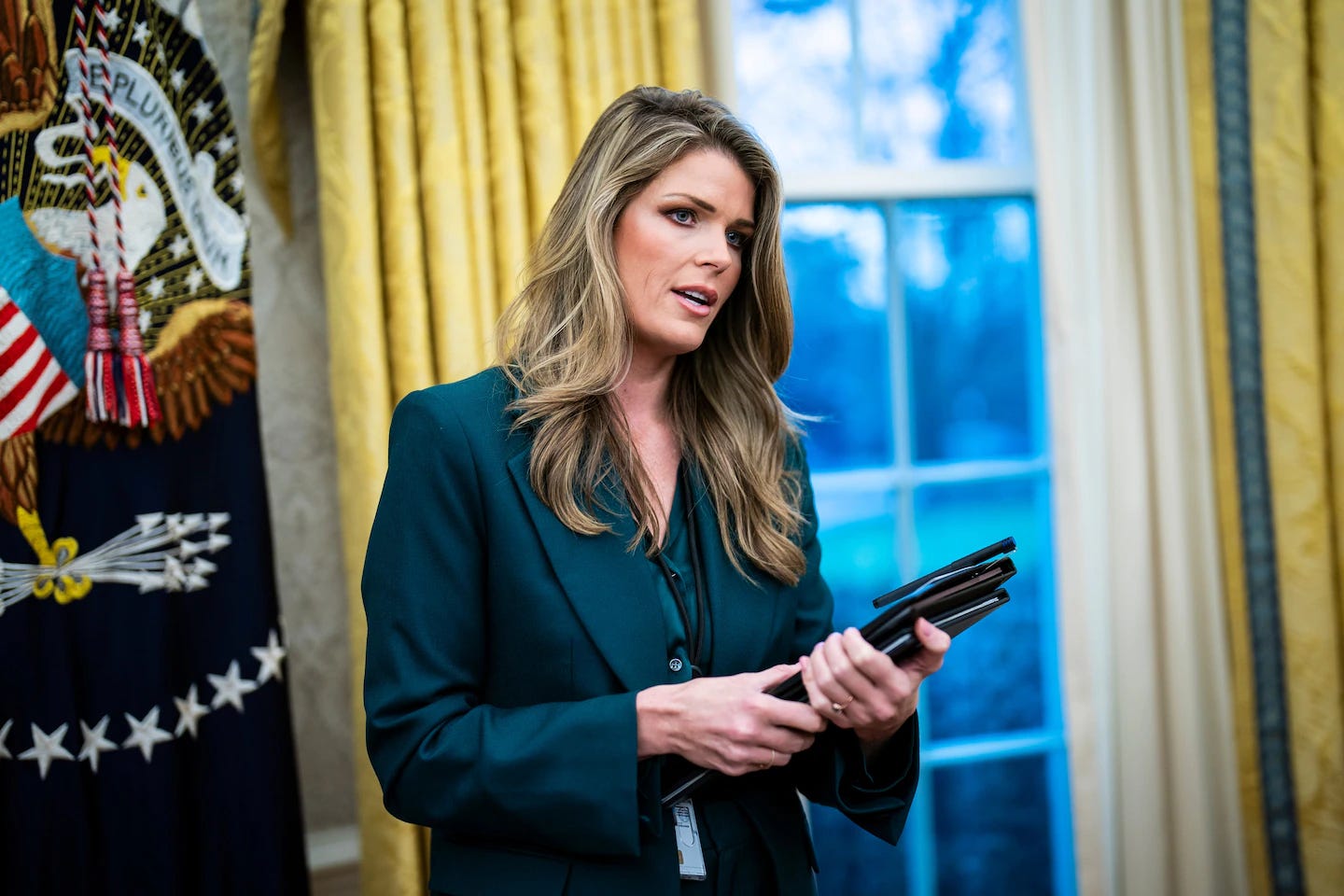
Photo: Jabin Botsford/The Washington Post
Overview
Date: November 24, 2025
Summary: A federal judge on November 24, 2025, dismissed criminal charges against former FBI Director James Comey and New York Attorney General Letitia James. The ruling found that Lindsey Halligan, the prosecutor handpicked by President Donald Trump to bring these cases, was unlawfully appointed as the interim U.S. attorney for the Eastern District of Virginia. The White House and Justice Department announced plans to appeal the decision. Comey and James both welcomed the ruling, asserting the charges were politically motivated.
Sources
The Wall Street Journal - James Comey and Letitia James Cases Dismissed in Blow to DOJ
Fox News - Federal judge dismisses James Comey, Letitia James indictments
Key Points
A federal judge dismissed criminal charges against former FBI Director James Comey and New York Attorney General Letitia James.
The dismissals were based on the finding that Lindsey Halligan, the prosecutor who brought the cases, was unlawfully appointed as the interim U.S. attorney for the Eastern District of Virginia.
Judge Cameron McGowan Currie ruled that the Trump administration’s appointment of Halligan was an unlawful successive interim appointment, circumventing the 120-day limit for such roles and the constitutional requirement for Senate confirmation.
The charges were dismissed “without prejudice,” meaning the Justice Department could potentially refile them.
The White House and Justice Department, including Attorney General Pam Bondi, stated their intent to appeal the judge’s ruling.
James Comey and Letitia James welcomed the decision, characterizing the charges as politically motivated.
Articles frequently note Halligan’s background as a former White House aide and personal lawyer to President Trump, with no prior prosecutorial experience.
The cases are widely seen as part of President Trump’s efforts to use the criminal justice system to target perceived political adversaries.
The ruling has broader implications for other federal cases in the Eastern District of Virginia and other interim U.S. attorney appointments made by the Trump administration.
Unique Highlights
The New York Times details the specific charges against Comey (lying to and obstructing Congress about authorizing media leaks) and James (bank fraud and making false statements in loan documents for a Norfolk, Va. home). It also cites former federal prosecutor Patrick Cotter on the “sound logic” of the judge’s rationale and the six-month window for refiling charges. The article lists other U.S. attorney offices where similar procedural maneuvers were used for appointments, including Alina Habba (New Jersey), Sigal Chattah (Nevada), and Bilal Essayli (Central District of California).
CNN includes a direct quote from James Comey’s Instagram video, elaborating on his view of the Department of Justice under Donald Trump and his resolve against future targeting. It describes “confusion in the Justice Department” regarding how to proceed with other cases, with initial conflicting instructions about whose name to use on court filings. The article specifies that Erik Siebert’s 120-day interim period began on January 21, 2025, and expired on May 21, 2025, with Halligan unlawfully serving since September 22, 2025.
NBC News quotes Judge Currie’s ruling describing Halligan as “a former White House aide with no prior prosecutorial experience” and notes the U.S. attorney’s office declined to comment on the ruling. It reports that other prosecutors in Halligan’s office had recommended against charging Comey and James due to insufficient evidence. The article also mentions that Kabul airport bombing suspect Mohammad Sharifullah filed a challenge to Halligan’s appointment, which is still pending.
The Washington Post highlights that President Trump forced out Erik S. Siebert after Siebert “concluded that the evidence did not suffice” to bring charges against Comey and James. It also points out that in other cases where Trump’s interim U.S. attorney picks were disqualified, courts often declined to dismiss indictments because career prosecutors were also involved, a situation different from Halligan acting alone.
The Wall Street Journal reports that Judge Currie “rejected Bondi’s ratification of the two indictments—weeks after they were filed—in a bid to bolster them against challenges to Halligan’s appointment.” It also notes that prosecutors were brought in from outside the Virginia office to help Halligan work on the cases.
Fox News quotes White House Press Secretary Karoline Leavitt telling Fox News’ Martha MacCaullum that “maybe James Comey should pump the brakes on his victory lap” in light of the Justice Department’s anticipated appeal. It also quotes Justice Department attorney Henry Whitaker arguing that the motions to dismiss involved “at best a paperwork error.”
Contrasting Details
Statute of Limitations for James Comey’s Case:
The New York Times states that Comey’s lawyers and a magistrate judge believe the five-year statute of limitations for his charges has expired, preventing refiling. However, government prosecutors argue the clock was paused when the indictment was returned.
NBC News elaborates on this, noting Comey’s attorney Patrick Fitzgerald’s view that the statute has run. At the same time, the Justice Department cites U.S. Code 3288, which allows a new indictment within six months if dismissed after the statute of limitations expired, a claim Comey’s attorneys dispute, arguing Halligan’s lack of authority voids all her actions.
The Washington Post supports the view that the time for Comey’s case has run out, stating that Judge Currie “appeared to endorse that view, citing precedents that have held that if an indictment is invalid at the time it is issued, it does not pause the clock on the statute of limitations.”
Legality and Qualification of Lindsey Halligan’s Appointment:
While all articles report Judge Currie’s ruling that Halligan’s appointment was unlawful, the White House and Attorney General Pam Bondi maintain a differing stance. The New York Times quotes White House Press Secretary Karoline Leavitt saying the judge “was clearly trying to shield Letitia James and James Comey from receiving accountability.”
The Wall Street Journal and Fox News both quote Karoline Leavitt asserting that Halligan was “extremely qualified” and “legally appointed,” directly contradicting the judge’s ruling and the consensus among legal experts cited in other articles.
The Newsie Project uses AI to summarize, compare, and contrast the reporting of the major US and world online news sources.
This is an evolving project. Tools, approaches, and output formats will change over time. The Newsie Project does not attempt to provide a definitive capsule of any news story. While the incidence of errors in these summaries is low, and I attempt to spot-check details, AI tools can hallucinate. Please click through and read the articles for details (some may be paywalled).