

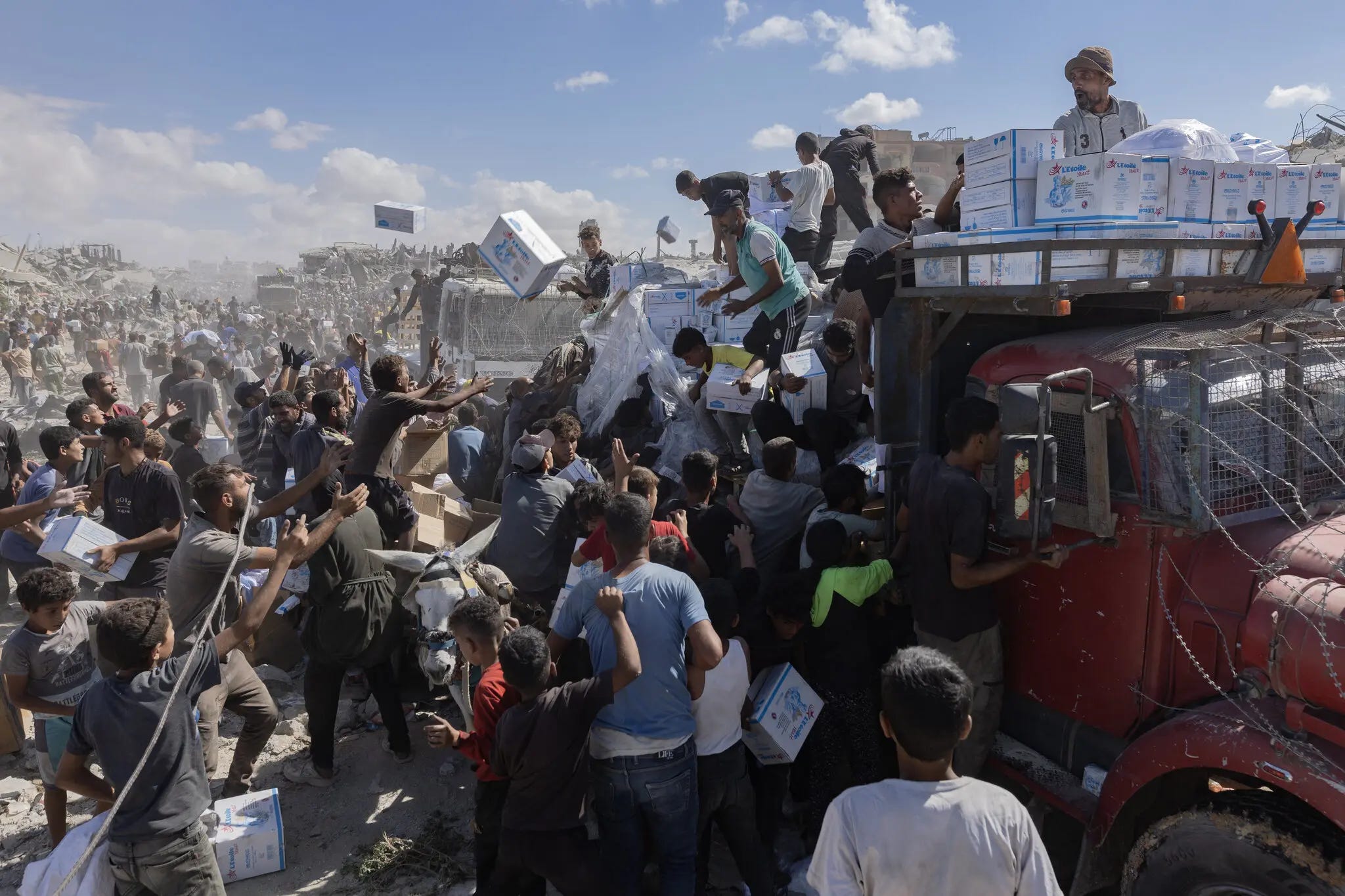
Photo: Saher Alghorra for The New York Times
Overview
Date: October 11-12, 2025
Summary: Multiple articles report on the implementation of a new, open-ended ceasefire in Gaza and an impending exchange of 20 Israeli hostages for approximately 2,000 Palestinian prisoners. This agreement, brokered by the U.S. and Arab mediators, has led to a withdrawal of Israeli forces from parts of Gaza and an increase in desperately needed humanitarian aid. While President Trump hails the deal as a major diplomatic success and plans a regional summit, underlying tensions and critical unresolved issues persist. These include the future disarmament of Hamas, the governance of post-war Gaza, and the establishment of an international stabilization force.
Sources
The New York Times - Israelis and Palestinians Await Hostage-Prisoner Swap With Relief and Elation
The New York Times - Israel and Hamas Were Not Ready for a Comprehensive Peace Deal, Mediator Says
CNN - Hamas asserts control in Gaza and targets alleged collaborators as ceasefire takes hold
The Washington Post - Gaza ceasefire holds; sides await release of hostages, prisoners
The Wall Street Journal - A Coordinated Squeeze Forced Hamas to Accept a Deal It Didn’t Want
Key Points
A new, open-ended ceasefire is in effect, accompanied by an imminent exchange of 20 Israeli hostages (believed to be alive) for approximately 2,000 Palestinian prisoners.
The deal includes a withdrawal of Israeli forces from certain areas of Gaza and a significant increase in humanitarian aid, with targets of around 600 trucks per day.
The agreement is considered the first phase of President Trump’s 20-point peace plan, with many crucial long-term issues (Hamas disarmament, Gaza governance, security mechanisms) intentionally left for later negotiations.
The war has caused immense devastation in Gaza, with over 67,000 Palestinian deaths reported, widespread displacement, and famine conditions in parts of the territory.
An International Stabilization Force (ISF) is envisioned in Trump’s plan to handle post-war security and train Palestinian police, though its formation and deployment face significant challenges and are still unclear.
Hamas initially resisted the deal, particularly regarding disarmament, but was pressured by Arab mediators (Egypt, Qatar, Turkey) and its weakening position on the ground.
President Trump and his emissaries, notably Jared Kushner and Steve Witkoff, played a central role in brokering the agreement, using a combination of diplomatic pressure and direct negotiation.
Unique Highlights
The New York Times (Israelis and Palestinians Await Hostage-Prisoner Swap): Notes that Israel’s Defense Minister, Israel Katz, specifically stated the greatest challenge after hostage release would be “the destruction of all of Hamas’s terror tunnels in Gaza,” to be carried out by Israeli forces and an international mechanism.
The New York Times (Israel and Hamas Were Not Ready): Quotes Qatar’s Prime Minister, Sheikh Mohammed bin Abdulrahman Al Thani, directly stating that “If we went for full-package negotiations, we wouldn’t have reached these results,” explaining the decision to delay thornier issues.
CNN: Provides specific details on Hamas reasserting internal control, including pictures of its security forces, reports of clashes with opposing clans (e.g., Dughmush family), and a week-long amnesty declared by the Hamas-run interior ministry for criminal gangs. It also names the “Popular Forces” in southern Gaza as a group opposed to Hamas, with its commander Hussam al-Astal publicly challenging Hamas.
The Washington Post: Details the specific numbers of prisoners Israel is expected to release: at least 250 “national security prisoners” and 1,722 Gazans held without charge since October 7, 2023, along with the remains of 360 militants. It also highlights that many prominent international aid organizations, including CARE and UNRWA, remain barred from sending aid into Gaza by Israeli registration rules or legislation.
The Wall Street Journal: Provides an in-depth account of the “coordinated squeeze” strategy used by Arab mediators (Egypt, Qatar, Turkey) to force Hamas to accept the deal, including warnings that Hamas would lose political and diplomatic cover if it refused.
El País: Highlights the specific “tricks more suited to family business than international diplomacy” used by Kushner and Witkoff in negotiations. It details the “turning point” as the Israeli bombing of Hamas leaders in Doha on September 9, which prompted Trump to harden his stance on Netanyahu.
Contrasting Details
Number of Hostages: The New York Times (Israelis and Palestinians Await Hostage-Prisoner Swap) and The Guardian state that 20 living hostages are expected to be freed, and the remains of 26 who died in captivity are to be returned. The Washington Post and El País mention 20 of the 48 hostages still in the enclave are thought to be alive, suggesting a total of 48, with the fate of 28 being deceased or unconfirmed.
Hamas’s Stance on Disarmament: The New York Times (Israel and Hamas Were Not Ready) reports Qatar’s Prime Minister stating Hamas is “open to have a discussion about how they won’t pose a threat for Israel” and previously showed willingness for a long-term truce in which they would lay down weapons. However, the same article also states Hamas has “maintained publicly that it is opposed to disarmament.” The Wall Street Journal reinforces this by stating Hamas initially rejected Trump’s plan because it “required disarmament without guarantees for ending the war.”
Post-War Security and Israeli Role: The New York Times (Israelis and Palestinians Await Hostage-Prisoner Swap) quotes Israel’s Defense Minister Israel Katz stating the destruction of Hamas’s tunnels would be carried out by Israeli military forces “and by means of the international mechanism.” This implies a direct Israeli role alongside an international force in a key aspect of demilitarization. In contrast, The Washington Post emphasizes “no U.S. boots on the ground in Gaza” and focuses on the International Stabilization Force (ISF) training Palestinian police, suggesting a less direct Israeli military role in post-conflict security.
Role of UNRWA: The Washington Post explicitly states that “Israel will not allow the U.N. Relief and Works Agency (UNRWA)… to send in staff or supplies,” citing Knesset legislation. The Guardian, however, states that “The UN will once again coordinate supplies into Gaza after months of being barred by Israel from doing so,” implying a broader UN coordination role that could encompass or replace UNRWA’s previous functions, or at least a significant shift from the previous ban.
The Newsie Project uses AI to summarize, compare, and contrast the reporting of the major US and world online news sources.
This is an evolving project. Tools, approaches, and output formats will change over time. The Newsie Project does not attempt to provide a definitive capsule of any news story. While the incidence of errors in these summaries is low, and I attempt to spot-check details, AI tools can hallucinate. Please click through and read the articles for details (some may be paywalled).