

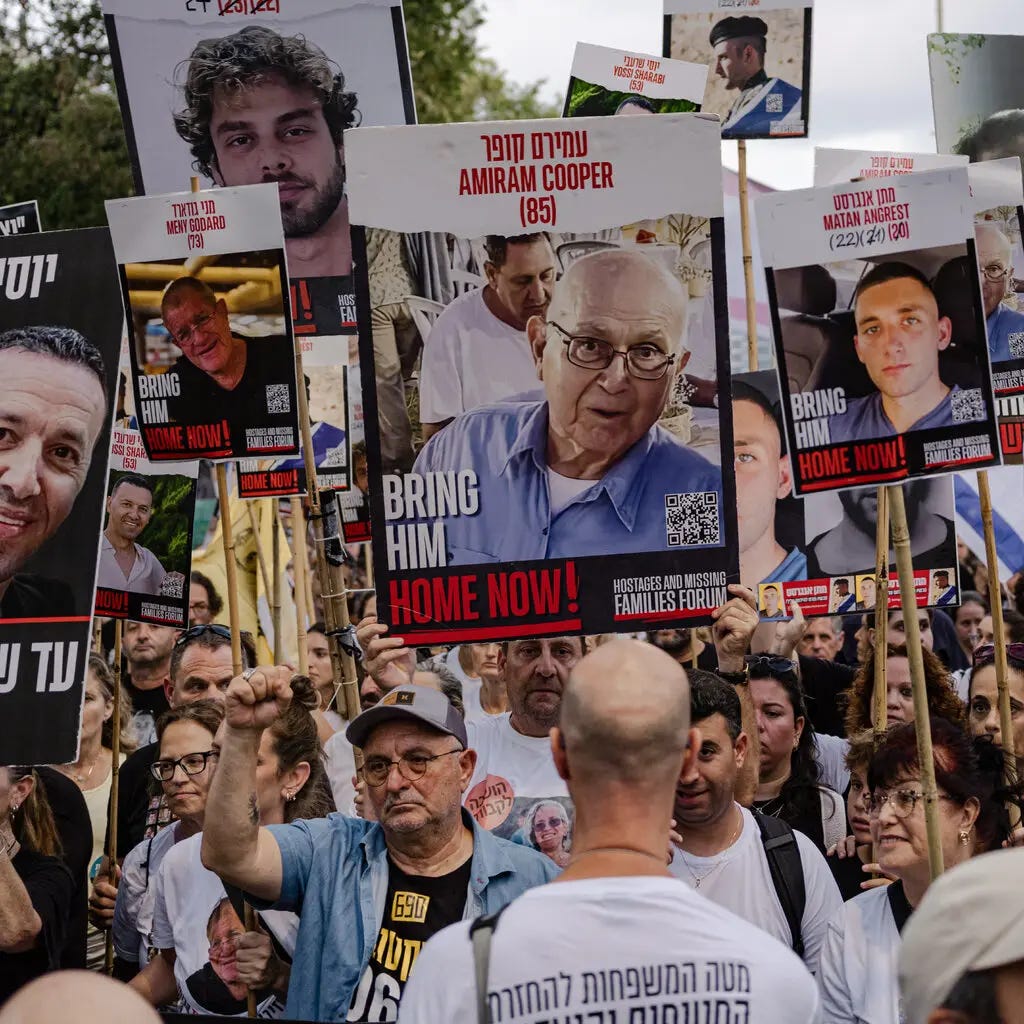
Photo: Amit Elkayam for The New York Times
Overview
Date: October 3, 2025
Summary: Hamas has responded to President Trump’s 20-point peace plan for Gaza, agreeing to release all Israeli hostages, both living and deceased, and to hand over the administration of Gaza to a Palestinian body of technocrats. However, Hamas’s acceptance is conditional, as the group seeks immediate negotiations through mediators to discuss the details of the agreement, particularly regarding Israel’s phased withdrawal from Gaza, the future governance of the Strip, and its own disarmament. Trump had issued an ultimatum, giving Hamas until Sunday evening to accept the plan or face severe consequences, with Israel having his “full backing” to eliminate the group. The plan has garnered broad support from Arab nations and Israel, placing Hamas under significant international pressure despite internal divisions and misgivings about certain terms.
Sources
NBC News - Hamas says it agrees to release all Israeli hostages, part of Trump’s Gaza peace plan
The Washington Post - Hamas accepts Trump’s plan to end Israel’s war in Gaza but with conditions
The Guardian - Hamas agrees to release all Israeli hostages as it accepts part of Trump’s plan
BBC - Hamas says it agrees to release Israeli hostages but seeks changes to US Gaza peace plan
Key Points
Hamas has agreed to release all Israeli hostages (living and deceased) according to the exchange formula in President Trump’s proposal.
Hamas’s acceptance is conditional, as the group seeks immediate negotiations through mediators to discuss the details of the plan.
Hamas has also agreed to hand over the administration of the Gaza Strip to a Palestinian body of independent technocrats, based on national consensus and Arab/Islamic support.
President Trump issued an ultimatum, setting a deadline of Sunday evening for Hamas to accept the plan, threatening “all HELL” if the agreement is not reached.
Israel backs the peace plan, and it has garnered significant support from Arab and Muslim-majority nations, placing Hamas under considerable international pressure.
A key sticking point for Hamas, which was largely unaddressed or explicitly not accepted in its response, is the demand for its disarmament and cessation of political power in Gaza.
The plan outlines a phased Israeli withdrawal from Gaza, an end to hostilities, and a redevelopment plan for the territory.
Israel, through Prime Minister Netanyahu, has expressed support for the plan and stated it would continue its campaign if Hamas rejects it or fails to follow through.
Unique Highlights
The New York Times: Provides extensive background on how President Trump leveraged an Israeli missile strike in Doha, Qatar, on September 9 to pressure Prime Minister Netanyahu into supporting the peace framework. It details the involvement of Jared Kushner and Steve Witkoff in negotiations, Netanyahu’s efforts to “water down” elements of the proposal, and his “humbling apology” to Qatar for the strike. The article also highlights internal divisions within Hamas regarding the plan.
CNN: Specifies the proposed hostage-prisoner exchange numbers: 48 hostages (20 alive) for 250 Palestinian prisoners with life sentences and 1,700 Palestinians detained since the war began. It details the plan’s proposal for an “International Stabilization Force (ISF)” led by Arab partners for security and a “Board of Peace” to oversee a Palestinian committee running Gaza. Barbara Leaf, a former top State Department official, offers analysis on the “bifurcation” of Hamas leadership (political wing in Qatar vs. military leaders in Gaza) as a complicating factor for negotiations.
NBC News: Notes that the Palestinian Authority praised Trump for his “sincere and tireless efforts” and reiterated its commitment to reforms for a future Palestinian state. It also mentions a joint statement from Muslim powers (Saudi Arabia, United Arab Emirates, Qatar, Egypt, Jordan, Turkey) welcoming the plan.
The Washington Post: Explicitly states that Trump’s 20-point plan was “not crafted in consultation with Palestinians” and was “modified during last-minute discussions held between Netanyahu and Americans.” It highlights Hamas’s specific balking at the proposal for an “international board” to oversee Gaza for an interim period and emphasizes Hamas’s increased isolation due to widespread Arab world backing for the deal.
EL PAÍS: Contains extensive reporting on the “Global Sumud Flotilla” incident, detailing the interception of the flotilla by Israel, the arrest and alleged mistreatment of activists (including journalists), protests in Italy and Spain, and diplomatic efforts to protect citizens. It also provides specific figures for malnutrition-related deaths in Gaza (457 total, 152 children) and daily casualty updates from Israeli offensives.
BBC: Mentions that Pakistan initially supported the plan, but its foreign minister later stated that the announced points were not in line with a draft from a group of Muslim-majority countries. It also cites UNICEF’s statement on the desperate conditions for mothers and newborns in Gaza, describing the idea of a safe zone in southern Gaza as “farcical.”
Contrasting Details
Hamas’s Disarmament: While most articles note Hamas’s silence or reluctance on disarmament, The New York Times explicitly states that Hamas’s statement “did not address key elements of the American proposal that called on the group to give up its arms.” The Guardian similarly notes that Hamas “did not say whether it would agree to a stipulation that it disarm.” BBC also highlights that the Hamas statement “makes no mention of one of the key demands of the plan – that Hamas agree to its disarmament.”
Netanyahu’s Stance on Palestinian Statehood: The New York Times notes that while Prime Minister Netanyahu managed to alter the text in Israel’s favor, the plan still contained a vague reference to “a credible pathway to Palestinian self-determination and statehood,” which Netanyahu opposed. In contrast, NBC News and BBC highlight that Netanyahu reiterated his longstanding opposition to Palestinian statehood after announcing support for the Trump plan, with BBC quoting him saying, “It’s not written in the agreement. We said we would strongly oppose a Palestinian state.” This suggests a potential discrepancy between the public statement of the plan and Netanyahu’s personal interpretation or commitment to its implications.
Consultation in Plan Crafting: The Washington Post explicitly states that the plan was “not crafted in consultation with Palestinians” and was “modified during last-minute discussions held between Netanyahu and Americans.” This detail about the lack of Palestinian consultation is not as clearly emphasized in other articles, which generally focus on the plan’s reception.
Focus of Coverage: EL PAÍS dedicates a significant portion of its live update to the “Global Sumud Flotilla” incident, including details about its interception, arrests, and alleged mistreatment of activists. This event, while related to the broader Middle East conflict, is not mentioned in any other article as part of the analysis of Hamas’s response to the peace plan, making it a distinct focus for EL PAÍS within its broader coverage.
The Newsie Project uses AI to summarize, compare, and contrast the reporting of the major US and world online news sources.
This is an evolving project. Tools, approaches, and output formats will change over time. The Newsie Project does not attempt to provide a definitive capsule of any news story. While the incidence of errors in these summaries is low, and I attempt to spot-check details, AI tools can hallucinate. Please click through and read the articles for details (some may be paywalled).