

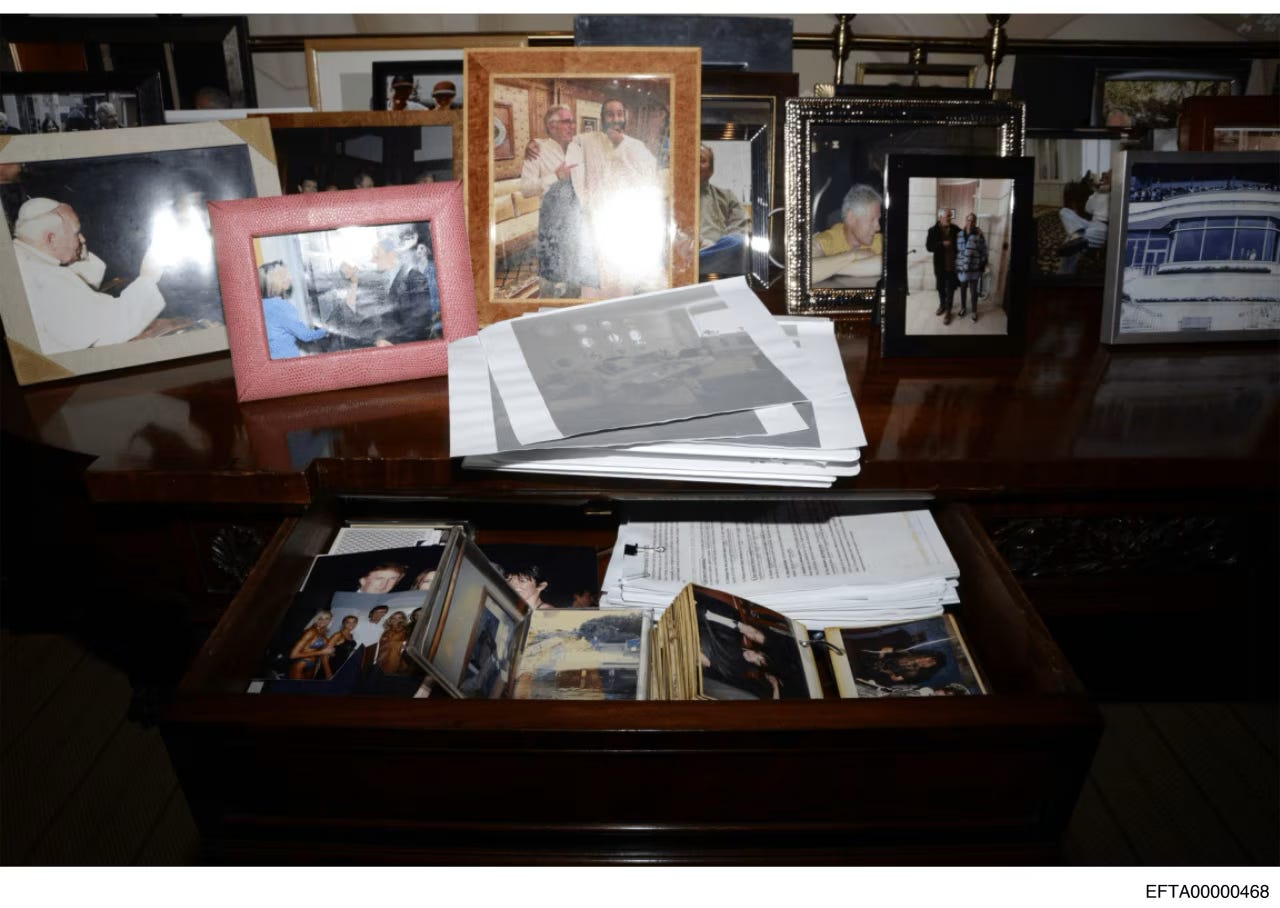
Photo: Department of Justice
Overview
Date: December 19, 2025
Summary: The Justice Department released thousands of documents related to Jeffrey Epstein, a convicted sex offender, in compliance with a bipartisan law signed by President Donald Trump. This initial batch, however, was incomplete and heavily redacted, drawing criticism from lawmakers and survivors who felt the department failed to fully meet its legal obligations. While no major new revelations or “smoking guns” emerged regarding Epstein’s criminal activities, the documents prominently featured former President Bill Clinton in photographs, a detail emphasized by the White House.
Sources
The New York Times - 6 Takeaways From the First Batch of the Epstein Files
CNN - 5 takeaways from the Justice Department’s Epstein files release
NBC News - Epstein survivors say they feel validated by the Justice Department records release
The Washington Post - Justice Dept. releases trove of Jeffrey Epstein records
The Wall Street Journal - Justice Department Releases Batch of Epstein Files
Fox News - Here is what‘s in the Department of Justice’s latest Epstein files drop
Key Points
The Justice Department released thousands of documents pertaining to Jeffrey Epstein, fulfilling a mandate from the Epstein Files Transparency Act, a bipartisan law signed by President Donald Trump.
The release was partial, with Deputy Attorney General Todd Blanche stating that more documents would be made public in the coming weeks.
Initial reviews of the released files indicated a lack of significant new revelations or “smoking guns” concerning Epstein’s conduct or his ties to prominent individuals.
Many documents were heavily redacted, including entire pages or files, which drew criticism from lawmakers and the public.
Former President Bill Clinton was prominently featured in photographs within the released materials, a point highlighted by the Trump administration.
President Donald Trump’s name appeared infrequently in this initial batch of documents, despite his known past association with Epstein.
Lawmakers from both parties criticized the Justice Department for failing to fully comply with the law’s deadline and extent of disclosure.
The documents confirmed that law enforcement received early warnings about Epstein’s activities, including a 1996 FBI complaint, which validated survivors’ accounts.
The files continued to demonstrate Epstein’s connections to a broad spectrum of famous people, including rock stars and newsmen.
Unique Highlights
The New York Times: Notes that the documents were largely silent about other well-known people associated with Epstein, such as businessmen Leon Black and Leslie H. Wexner. It also states that Mr. Trump actively fought the release of the files for months, calling them a “Democratic hoax.”
CNN: Reports on a Reuters-Ipsos poll indicating that 7 in 10 Americans believed the government had hidden information about Epstein. It mentions a Justice Department spokesman, Gates McGavick, identifying someone in a hot tub with Bill Clinton as a “victim.” The article also recounts that President Trump was tied to one of Epstein’s victims, Virginia Giuffre, but denied wrongdoing.
NBC News: Emphasizes the emotional impact on survivors, quoting Maria Farmer saying, “This is amazing. Thank you for believing me. I feel redeemed,” while also expressing sadness for others harmed. It highlights Dani Bensky’s feeling of being “validated” but wishing for more information. The article also mentions that some photos were marked CSAM (Child Sex Abuse Material) and provides resources for suicide and crisis support.
The Washington Post: Cites an anonymous person familiar with the redaction process who stated that President Trump’s name was included multiple times throughout the files, implying more mentions in future releases. It details former Labor Secretary Alexander Acosta’s defense of Epstein’s 2008 plea deal and his subsequent resignation. The article also recalls Attorney General Pam Bondi’s earlier claim of having Epstein’s “client list” and a subsequent Justice Department memo in July stating “no further disclosure” was needed. It mentions Deputy Attorney General Todd Blanche’s “unusual move” of traveling to Florida to interview Ghislaine Maxwell.
The Wall Street Journal: Describes specific items in the release, including handwritten notes on Epstein’s stationery, a largely redacted 2019 grand jury subpoena, and a photo of a log book cover for trips to Epstein’s island without showing the contents. It highlights FBI interview notes from 2019 where a woman reported Epstein asking for a girl’s ID to ensure she was under 18. The article lists additional famous individuals pictured in the files, such as Richard Branson, David Copperfield, Segway inventor Dean Kamen, psychiatrist Henry Jarecki, and psychologist Steven Pinker (who stated his photo was from 2002). It also references The Wall Street Journal’s articles about Epstein’s 50th birthday book, which included a note with President Trump’s signature, leading to Trump suing Dow Jones for defamation.
Fox News: Categorizes the released documents into four distinct data sets: photos of Epstein’s properties, personal photos with high-profile individuals (including Epstein shirtless and Bill Clinton shirtless in a hot tub), heavily redacted photos of potential victims and grand jury records, and evidence/exhibits from investigations. Clinton spokesman Angel Ureña is quoted as categorizing individuals involved in the Epstein scandal into two groups: those who cut ties upon learning of his crimes and those who continued relationships.
Contrasting Details
Extent of Compliance and Reasons for Delay: While all articles agree the Justice Department’s release was partial, CNN and The Washington Post are more critical, with CNN stating the administration “failed to follow the law, likely seeding more suspicion.” NBC News notes survivors “hoped more would have been released.” Deputy Attorney General Todd Blanche (cited in The New York Times, CNN, NBC News, The Washington Post, and Fox News) attributed the delay primarily to the extensive review process required to protect victims’ identities and the sheer volume of documents. However, The Washington Post additionally reported that the Justice Department withheld some files due to “legal privileges” (internal deliberations) that the new law did not specifically waive. CNN further pointed out that redactions were inconsistent and sometimes for reasons beyond those prescribed by law.
Political Intent Behind the Release: The New York Times, CNN, and The Washington Post suggest a political motivation behind the emphasis on former President Bill Clinton in the initial release. The New York Times states the White House “sought to make political hay of the release of the photos of Mr. Clinton,” and CNN notes the administration “took great care to point that out.” Clinton’s spokesman, Angel Ureña (quoted in The New York Times, CNN, The Washington Post, The Wall Street Journal, and Fox News), explicitly accused the Trump administration of “shielding themselves from what comes next, or from what they’ll try and hide forever” by focusing on Clinton. Conversely, The Wall Street Journal contextualizes that Trump allies had long discussed Epstein’s ties to powerful men and the circumstances of his death, and many voters expected a Trump administration to release the files, suggesting a different political angle for the release itself.
President Trump’s Mentions: Most articles (The New York Times, CNN, The Washington Post, The Wall Street Journal) note that President Trump was mentioned rarely in this first batch of files. However, The Washington Post provides a contrasting detail from an anonymous source familiar with the redaction process, who stated that “Trump’s name was included multiple times throughout the files,” implying that more mentions of him might appear in future releases. CNN also provided context on Trump’s past ties to an Epstein victim and his denial of wrongdoing, while The Washington Post quoted Trump’s 2002 comments about Epstein and his later explanation for their falling out.
The Newsie Project uses AI to summarize, compare, and contrast the reporting of the major US and world online news sources.
This is an evolving project. Tools, approaches, and output formats will change over time. The Newsie Project does not attempt to provide a definitive capsule of any news story. While the incidence of errors in these summaries is low, and I attempt to spot-check details, AI tools can hallucinate. Please click through and read the articles for details (some may be paywalled).