

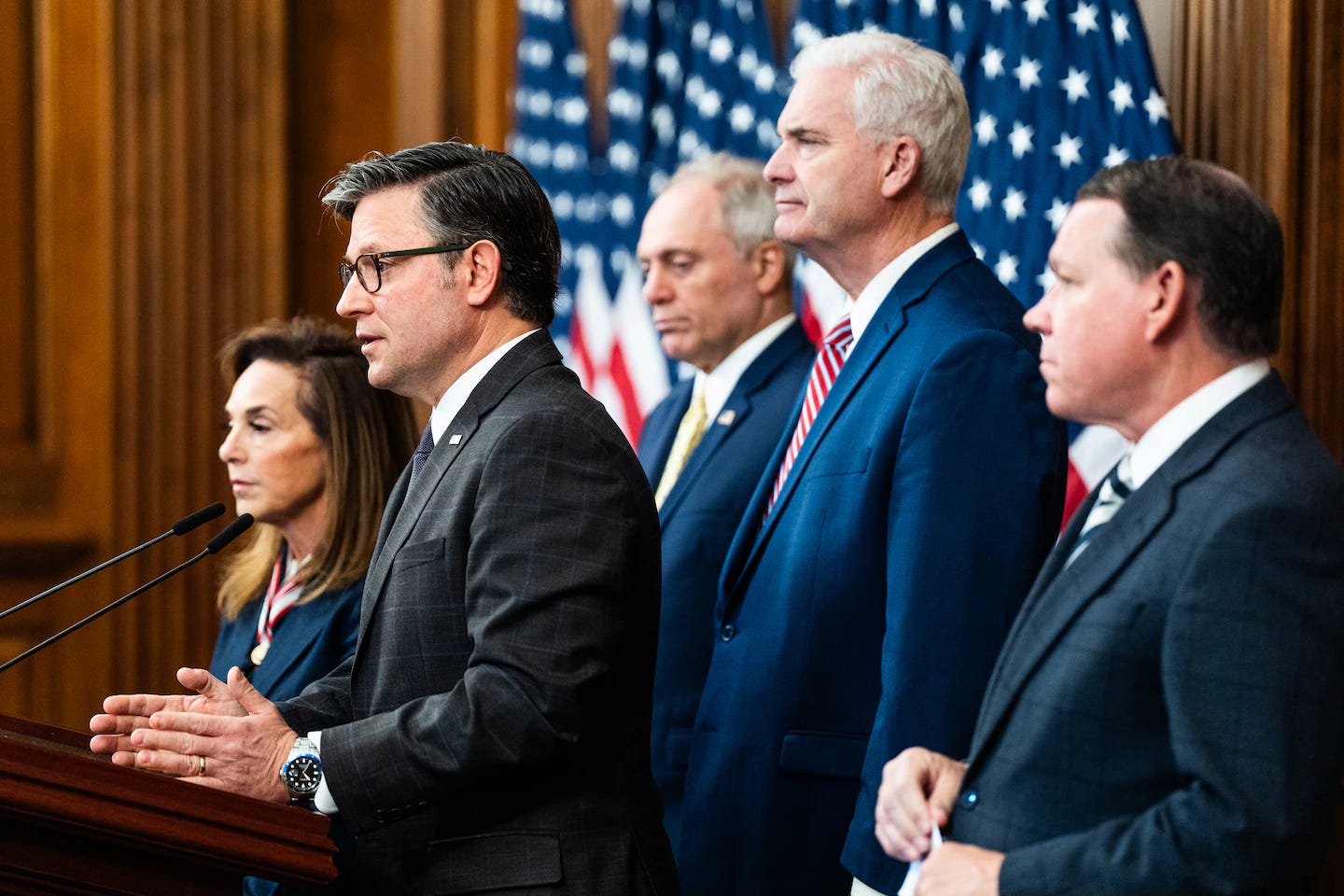
Photo: Demetrius Freeman/The Washington Post
Overview
Date: December 17, 2025
Summary: House Republicans faced deep internal divisions as four moderate members defied Speaker Mike Johnson, joining Democrats to force a vote on extending enhanced Affordable Care Act (ACA) subsidies set to expire at year-end. This maneuver, achieved through a discharge petition, sets the stage for a January vote on a three-year extension, even as Johnson successfully passed a separate, narrower GOP healthcare bill that allows the subsidies to lapse. The impending expiration of the subsidies threatens to significantly raise healthcare premiums for millions of Americans, creating a major political challenge for Republicans heading into a midterm election year, with both the discharge petition bill and the GOP’s legislation facing uncertain prospects in the Senate.
Sources
The New York Times - Republicans Clinch Democratic Bid to Force Vote on Health Subsidies
CNN - House GOP passes narrow health care package, letting key Obamacare subsidies expire
NBC News - Centrist Republicans revolt, signing a petition to force a vote on Obamacare funding
The Washington Post - Moderate House Republicans join Democrats to force vote on ACA subsidies
The Wall Street Journal - Frustrated GOP Centrists Back ACA Vote, Siding With House Democrats
Fox News - Speaker Johnson ekes out healthcare bill victory after House GOP Obamacare rebellion
Key Points
Expiring ACA Subsidies: All articles highlight the imminent expiration of enhanced Affordable Care Act (ACA) subsidies at the end of December, which will lead to significant premium increases for millions of Americans.
Republican Revolt: A group of four moderate House Republicans (Representatives Brian Fitzpatrick, Rob Bresnahan Jr., Ryan Mackenzie, all of Pennsylvania, and Representative Mike Lawler of New York) joined Democrats in signing a discharge petition.
Discharge Petition Success: The signatures clinched the 218 votes needed for a Democratic discharge petition, led by House Minority Leader Hakeem Jeffries, to force a House floor vote on a three-year extension of the ACA subsidies.
Speaker Johnson’s Opposition: Speaker Mike Johnson refused to allow a vote on extending the subsidies, citing conservative opposition and concerns over cost and abortion restrictions. He instead pushed for a separate Republican healthcare bill.
Passage of GOP Healthcare Bill: The House passed a narrow Republican healthcare package (216-211, largely along party lines) that includes provisions for association health plans, cost-sharing reduction payments, and transparency for pharmacy benefit managers. This bill allows the enhanced ACA subsidies to expire.
Senate Hurdles: Both the Democratic-backed subsidy extension (via discharge petition) and the House-passed GOP healthcare bill face significant challenges and are not expected to pass the Senate easily, where similar measures have already been rejected or face bipartisan disagreement.
Political Implications: The internal Republican divisions and the looming premium hikes are seen as major political liabilities for the party heading into next year’s midterm elections, further challenging Speaker Johnson’s leadership over a slim majority.
Unique Highlights
The New York Times: Mentions that Representative Kevin Kiley of California criticized both Speaker Johnson for refusing a vote on tax credits and Representative Jeffries for an “uncompromising measure.” It also notes that Representative Jen Kiggans of Virginia voted against advancing the GOP health care bill, showing further discontent. The article highlights that this is the fourth discharge petition this year to advance after Republicans joined Democrats, comparing it to the 1937-38 session, when four discharge petitions received 218 signatures in a single Congress.
CNN: Details that if the enhanced subsidies lapse, enrollees will see their annual premium payments increase by 114% – or about $1,000 – on average in 2026, according to KFF, a nonpartisan health policy research group.
NBC News: Identifies the GOP bill by its full name, the “Lower Health Care Premiums for All Americans Act.” It specifies that House rules require seven legislative days to lapse before a bill discharged by petition comes to the floor, meaning the vote will likely be in the second week of January. The article also references a previous successful discharge petition last month to release government files on Jeffrey Epstein.
The Washington Post: Provides specific Congressional Budget Office (CBO) estimates for Speaker Johnson’s bill, stating it would reduce the deficit by $35.6 billion over the next decade and reduce premiums by about 11 percent. It mentions Rep. Nick LaLota’s proposed plan to replace subsidies with equivalent tax credits directly to people and Rep. Jen Kiggans’s separate discharge petition for a one-year extension. The article also states that the subsidies have more than doubled enrollment in health care plans through the ACA marketplace.
The Wall Street Journal: Quotes Representative Mike Lawler saying, “I am pissed for the American people. This is absolute bulls—,” regarding the standoff. It also quotes Senator Chris Murphy (D., Connecticut) stating, “It feels like the dam is breaking,” and suggesting Republicans “are going to be ruined politically if they continue to hold their ground.” The article details that the Democrats’ three-year extension of enhanced ACA subsidies would add about $83 billion to the federal deficit, according to the CBO.
Fox News: Identifies Representative Thomas Massie (R-Kentucky) as the sole Republican who voted against Speaker Johnson’s healthcare bill, along with all House Democrats. It quotes Republican Study Committee Chairman August Pfluger (R-Texas) calling Obamacare “an unmitigated disaster for 15 years.”
Contrasting Details
Number of Americans Affected by Expiring Subsidies:
The New York Times states “roughly 20 million Americans.”
The Wall Street Journal mentions “about 20 million people on ACA plans,” but later states the subsidies will lapse for an “estimated 22 million people” who get their health care insurance through the Affordable Care Act marketplace.
NBC News reports “about 22 million people.”
The Washington Post indicates “most of the 24 million Americans.”
Projected Premium Increases if Subsidies Expire:
CNN projects an average annual premium increase of 114%, or about $1,000.
NBC News states insurance costs are projected to “double, on average.”
The Wall Street Journal notes gross premiums for ACA benchmark plans are set to rise about 26%.
Premium Reduction Estimate for House GOP Bill:
The Washington Post and Fox News (citing CBO) state the bill would reduce premiums by about 11%.
Fox News also reports that House GOP leadership aides claimed the bill would bring down the cost of premiums by 12%.
The Newsie Project uses AI to summarize, compare, and contrast the reporting of the major US and world online news sources.
This is an evolving project. Tools, approaches, and output formats will change over time. The Newsie Project does not attempt to provide a definitive capsule of any news story. While the incidence of errors in these summaries is low, and I attempt to spot-check details, AI tools can hallucinate. Please click through and read the articles for details (some may be paywalled).