

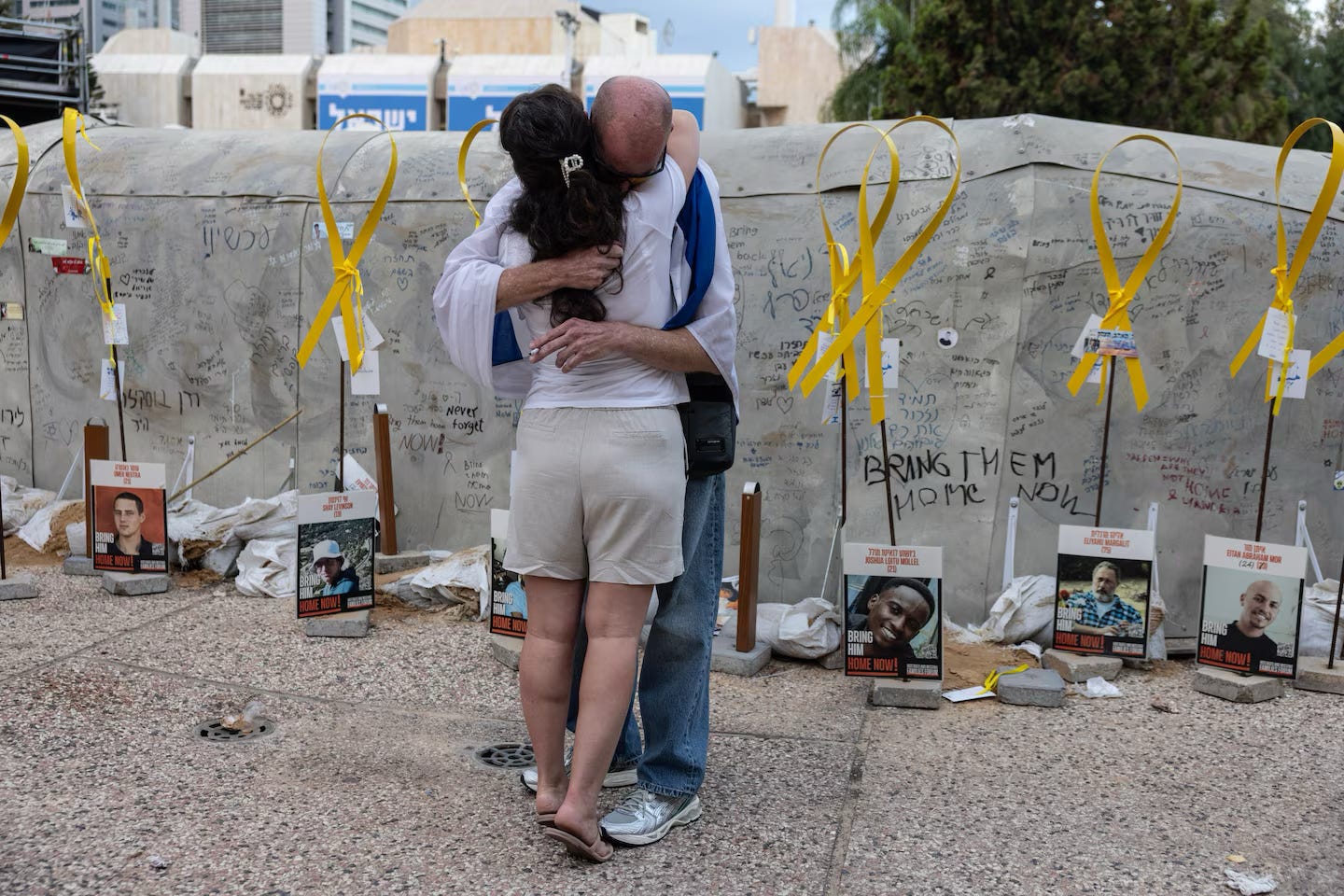
Photo: Heidi Levine/For The Washington Post
Overview
Date: October 14, 2025
Summary: A recently brokered Gaza ceasefire faces significant challenges, primarily Israel’s frustration over Hamas’s slow return of deceased hostages’ bodies. Israel has retaliated by limiting humanitarian aid and postponing the opening of the Rafah crossing. Hamas, citing widespread destruction in Gaza, claims difficulty in locating all remains but Israeli officials suspect deliberate delays. Simultaneously, Hamas is violently reasserting control in Gaza, clashing with rival groups and publicly executing alleged collaborators, raising concerns about the territory’s post-ceasefire security. U.S. President Donald Trump, who brokered the deal, has issued warnings to Hamas regarding disarmament while also acknowledging their temporary role in policing Gaza, highlighting the complexities and early tensions of the peace plan.
Sources
The New York Times - Israel Pressures Hamas to Return Bodies, but Gaza’s Destruction Poses Challenge
The New York Times - ‘A Big Day’: How the U.S. and the Arab World Teamed Up to Seal the Gaza Deal
CNN - Masked fighters seen executing men in Gaza City as Hamas fights with rival groups
The Washington Post - Bodies of fathers, soldiers and students remain in Gaza after hostage release
The Guardian - Israel limits aid and keeps Rafah crossing closed in dispute over hostage remains
The Guardian - Trump says Hamas will be forced to disarm or ‘we will disarm them’
Key Points
A central point of tension in the ceasefire is Hamas’s failure to immediately return all deceased Israeli hostages’ bodies as stipulated in the agreement, leading to anger and accusations of breach from Israel.
In response to the slow pace of body transfers, Israel has implemented punitive measures, including limiting humanitarian aid entering Gaza and postponing the opening of the Rafah border crossing.
Hamas has emerged from hiding and is actively reasserting its authority in Gaza, engaging in clashes with rival groups and carrying out public executions of alleged collaborators, raising concerns about the territory’s post-ceasefire security.
Hamas officials and humanitarian organizations cite the widespread destruction and rubble in Gaza as a significant challenge to quickly locating and retrieving all human remains.
U.S. President Donald Trump played a crucial role in brokering the ceasefire and has publicly pressured Hamas to return the bodies and disarm, while also acknowledging a temporary, limited role for Hamas in maintaining security in Gaza.
The ceasefire agreement’s “Phase Two,” which includes Hamas’s disarmament and the establishment of a future Gaza administration, faces significant difficulties and unresolved issues, acknowledged by mediators.
The ceasefire period has seen further violence, including Israeli forces killing Palestinians in airstrikes and Hamas carrying out extrajudicial executions in Gaza City.
Unique Highlights
The New York Times (‘‘A Big Day’: How the U.S. and the Arab World Teamed Up to Seal the Gaza Deal’) provides an in-depth, behind-the-scenes account of the ceasefire negotiations, detailing the specific roles of U.S. envoys Jared Kushner and Steve Witkoff, Israeli negotiator Ron Dermer, Hamas negotiator Khalil al-Hayya, and the Qatari Prime Minister, including Trump’s direct phone calls and a meeting between Witkoff and al-Hayya.
The Washington Post offers extensive biographical details for many of the deceased hostages, both those returned and those still held, including their ages, capture circumstances, and family reactions, and explicitly names 27 deceased hostages whose bodies remained in Gaza prior to recent transfers.
El País specifies that Israel announced it would allow no more than 300 trucks of humanitarian aid daily into Gaza, which is “half of the minimum stipulated in the agreement.”
El País and CNN detail the clashes between Hamas and the Doghmush family clan, with El País adding that some rival factions actively collaborated with Israel and looted aid, and quoting the Palestinian Tribal Committee supporting Hamas’s actions against collaborators.
The Guardian (‘Israel limits aid and keeps Rafah crossing closed in dispute over hostage remains’) provides specific figures for Gaza’s reconstruction, estimating a total cost of $70 billion, with $20 billion needed in the next three years, and 55 million tons of rubble.
The New York Times (‘Israel Pressures Hamas to Return Bodies, but Gaza’s Destruction Poses Challenge’) details that Israel is required to release the bodies of 15 deceased Palestinian prisoners for every deceased former hostage, and that Israel released 45 unidentified bodies to Nasser Hospital.
The Guardian (‘Israel limits aid and keeps Rafah crossing closed in dispute over hostage remains’) mentions that Egyptian Foreign Minister Badr Abdelatty stated 15 Palestinian technocrats have been selected to administer Gaza, approved by all Palestinian factions, and vetted by Israel.
Contrasting Details
Number of Bodies Returned by Hamas: The New York Times initially states Hamas returned “only four bodies” on Monday, then “several more” late Tuesday night. El País reports Hamas returned “eight bodies since Sunday,” with the last four yet to be identified. The Guardian confirms four bodies were returned initially, and then “four more” on Tuesday night, totaling eight.
Trump’s Stance on Hamas’s Post-Ceasefire Role: CNN and The Guardian report Trump suggesting he gave “approval” for Hamas to “police the territory for ‘a period of time’” or have a “limited role” in maintaining order. In contrast, Fox News and The Guardian also report Trump’s more forceful statements on Tuesday, warning Hamas that if they don’t disarm, “we will disarm them” and it “will happen quickly and perhaps violently.”
Timing of “Phase Two” Commencement: Fox News and The Guardian quote Trump’s Truth Social post saying, “Phase Two begins right NOW!!!” However, The Guardian also reports Trump in Egypt saying “Phase two has started,” but then clarifying that “The phases are all a little bit mixed in with each other.” El País quotes a Qatari Foreign Ministry spokesman admitting that the rush to return hostages had forced a “significant” delay in analyzing thorny aspects of the second phase, suggesting it is still in early, difficult negotiations.
Israel’s Knowledge of Body Locations: The New York Times reports that Israeli officials believe Hamas “knows the location of many, but not all, of the bodies.” However, The Guardian reports that Israeli military officials “believe Hamas knows where more of the hostages’ remains are to be found and have deliberately delayed their transfer,” implying a stronger belief in Hamas’s full knowledge and intentional obstruction.
The Newsie Project uses AI to summarize, compare, and contrast the reporting of the major US and world online news sources.
This is an evolving project. Tools, approaches, and output formats will change over time. The Newsie Project does not attempt to provide a definitive capsule of any news story. While the incidence of errors in these summaries is low, and I attempt to spot-check details, AI tools can hallucinate. Please click through and read the articles for details (some may be paywalled).